
- Nephrology
- Cardiology
- Emergency & Critical Care
- Gastroenterology
- Obstetrics, Gynecology & IVF
- International Patients
- Patient Care
- Resource Centre
- Nephrology
- Cardiology
- Emergency & Critical Care
- Gastroenterology
- Obstetrics, Gynecology & IVF
- International Patients
- Patient Care
- Resource Centre


- Nephrology
- Cardiology
- Emergency & Critical Care
- Gastroenterology
- Obstetrics, Gynecology & IVF
- International Patients
- Patient Care
- Resource Centre
- Nephrology
- Cardiology
- Emergency & Critical Care
- Gastroenterology
- Obstetrics, Gynecology & IVF
- International Patients
- Patient Care
- Resource Centre
Why I Am Not Satisfied with Just Treating Patients: The Case for a Blue India
Why I Am Not Satisfied with Just Treating Patients: The Case for a "Blue India"
I have spent decades as a nephrologist, sitting beside patients and families during some of the hardest moments of their lives. When kidneys fail, it is never just a medical crisis. It becomes a life crisis. I have seen the fear in a patient’s eyes when they hear the word dialysis for the first time. I have seen the silent grief of a family calculating costs they never prepared for. And I have seen something even more painful, the regret that comes with one sentence: “Doctor, we did not know this was happening.” That is why I believe preventive healthcare in India must become our strongest national priority, not an afterthought.
The Issue: The Disease Was Quiet, Until It Was Too Late
Kidney disease does not always announce itself loudly. It often grows in silence, behind a normal routine, a busy job, and a family life that leaves little time for self-care. Many people feel fine until the damage is already advanced. By the time swelling, fatigue, or breathlessness begins, the body has already been struggling for years. This is the heartbreaking truth I have learned again and again, lifestyle conditions like diabetes and hypertension quietly injure the kidneys long before a person feels “sick.” If we truly want kidney disease prevention in India, we cannot depend only on hospitals and specialists. We must build awareness, early screening, and everyday health habits into normal life.
India has made incredible progress in medical infrastructure. We have skilled doctors, advanced diagnostics, and hospitals that can deliver complex care at global standards. But I have also realised something deeply unsettling. We have invested heavily in treating illness, yet we have not invested enough in preventing it.
We have built systems that respond brilliantly when the body breaks down, but we have not built systems that protect the body before it breaks. This gap is where millions of people fall through. This is why lifestyle disease prevention India must become a public movement, not just a medical message shared inside clinic walls.
Chronic Disease Is Not Only a Health Problem
When chronic disease enters a home, it changes everything. It changes finances, work, mental peace, and family stability. Dialysis is not just a procedure, it is a schedule that takes over a life. Transplant is not just surgery, it is a journey that demands money, time, emotional strength, and long term care. The economic impact of lifestyle diseases is enormous, not only for families, but for the nation as well. When the most productive years of a person’s life are spent managing preventable illness, we lose potential, progress, and prosperity. This is why I often speak about the future of healthcare India as something far bigger than hospitals. It is about building a healthier population before disease becomes a lifelong sentence.
The Solution Route: Move From Curative to Preventive
The answer is not to replace hospitals. The answer is to reduce the number of people who need them for preventable conditions. We must shift from a system that waits for illness to a system that actively protects health. This means early detection, regular screening, community level health education, and lifestyle correction before complications begin. Prevention is not dramatic, it is simple and consistent. It is eating better, moving more, sleeping well, managing stress, checking blood pressure, checking sugar levels, and acting early.
When healthy habits become culture, chronic disease reduces naturally. That is the purpose behind my work as Dr Murugesan nephrologist, building prevention into everyday life.
What Are Blue Zones, And Why Do They Matter?
Across the world, there are regions called Blue Zones, places where people live long, active lives with lower rates of chronic disease. Okinawa in Japan and Sardinia in Italy are often cited as examples. These communities do not rely only on hospitals to stay healthy. Their lifestyle supports health naturally through food habits, movement, social connection, purpose, and routine. They have created environments where the healthier choice becomes the easier choice. When I learned about these regions, I asked myself a simple question: If other parts of the world can build a culture of longevity, why not us? India does not lack tradition, wisdom, or community strength. What we need is a structured, modern approach to apply it.
The Story: Why I Started the Blue India Movement
In August 2025, I launched the Blue India Movement with one clear vision: to extend the average lifespan of every Indian by 10 to 20 years. Some may call it ambitious. I call it necessary. Because we cannot accept a future where diabetes, hypertension, obesity, and heart disease become normal by middle age. We cannot accept kidney failure as an expected outcome of lifestyle diseases. We cannot accept families suffering when prevention was possible. Blue India is my answer to that acceptance. It is a movement designed to shift our thinking from “treating disease” to “engineering health.”
Building a Blue Zone in Puducherry
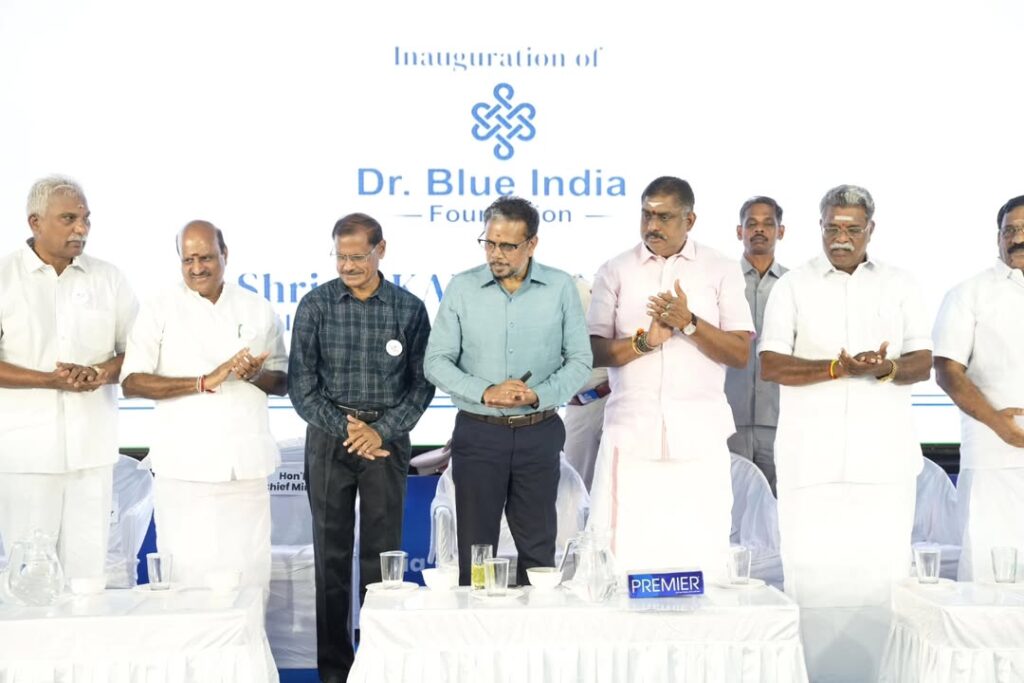
Puducherry is not just where I work, it is where I have witnessed the impact of lifestyle disease at the closest level. That is why the Blue India Movement begins here. The goal is to build a working model, a Blue Zone in Puducherry, where prevention becomes a community system, not an individual struggle. Through the Dr. Blue India Foundation, we aim to create awareness, encourage early screening, and inspire sustainable lifestyle changes that reduce the risk of chronic disease. This is not about perfection. It is about progress, one habit, one family, and one community at a time.
What “Blue India” Truly Means
Blue India is not a slogan. It is a shift in mindset. It is about helping people understand that health is built daily, not repaired occasionally. It is about empowering citizens with knowledge, simple routines, and access to early detection. It is about reminding people that the absence of symptoms does not mean the absence of disease. And it is about making prevention aspirational, not fear based. When prevention becomes normal, the load on hospitals reduces, families suffer less, and the nation becomes stronger.
A Call to Doctors, Policymakers, And Citizens
To my fellow doctors, I say this with respect, we cannot be satisfied with only treating the final stage of disease. We must fight earlier. To policymakers, I say prevention is one of the most powerful investments a nation can make. And to citizens, I say this, your health is not a future goal, it is a daily decision. The time to treat sickness is not over, but the time to prioritise prevention has absolutely begun. If we want a longer living, stronger India, we must build a culture where health is protected before it is lost.
Dr. N. Murugesan
Founder, Blue India Movement